

The Dungeons of Grimlor II — The Lich
MODERN FREE TO PLAY WEB VERSION RELEASED!
(Click here to play in your Browser!)
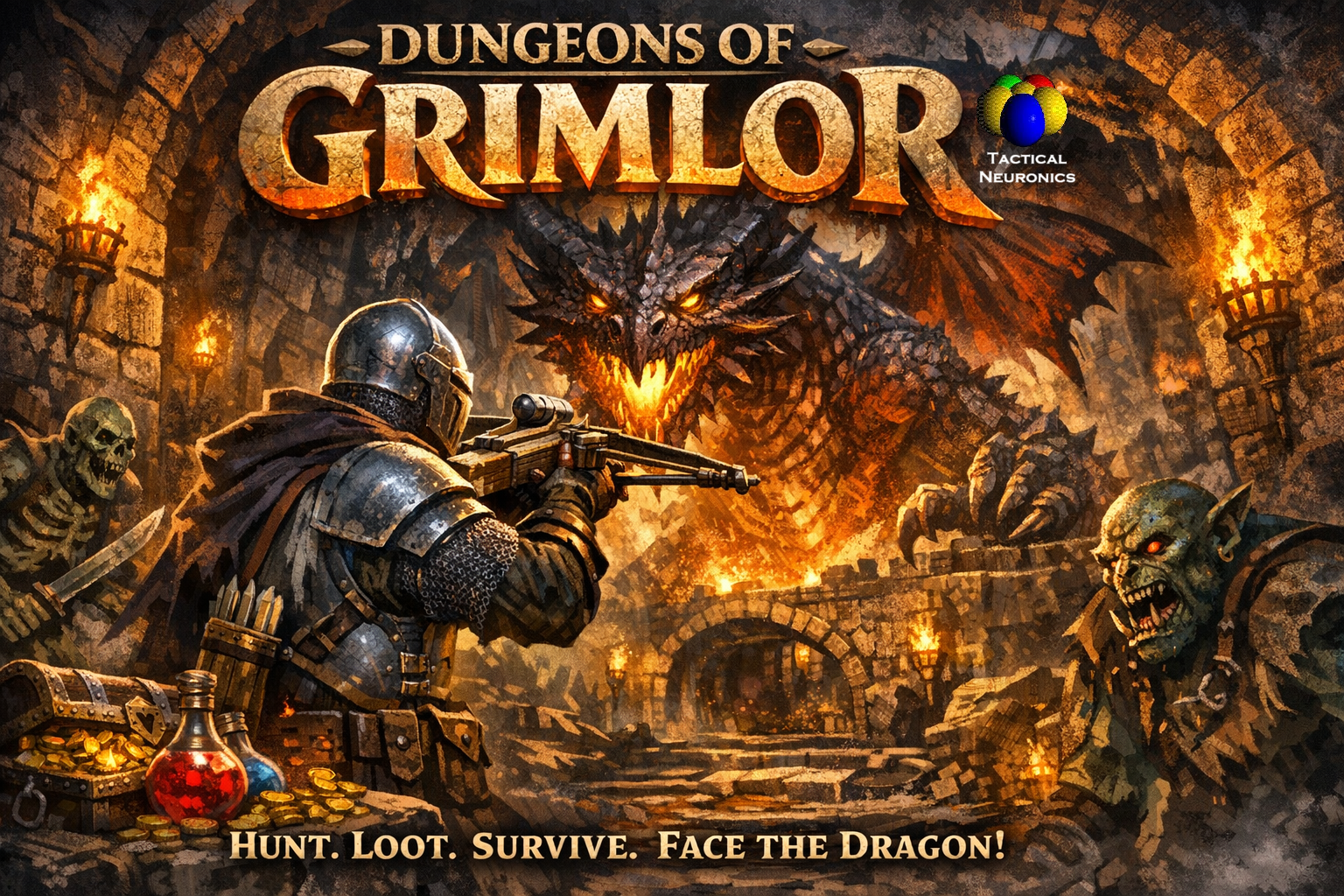
[Dungeons of Grimlor WEB]
LEGACY DOS VERSION BELOW
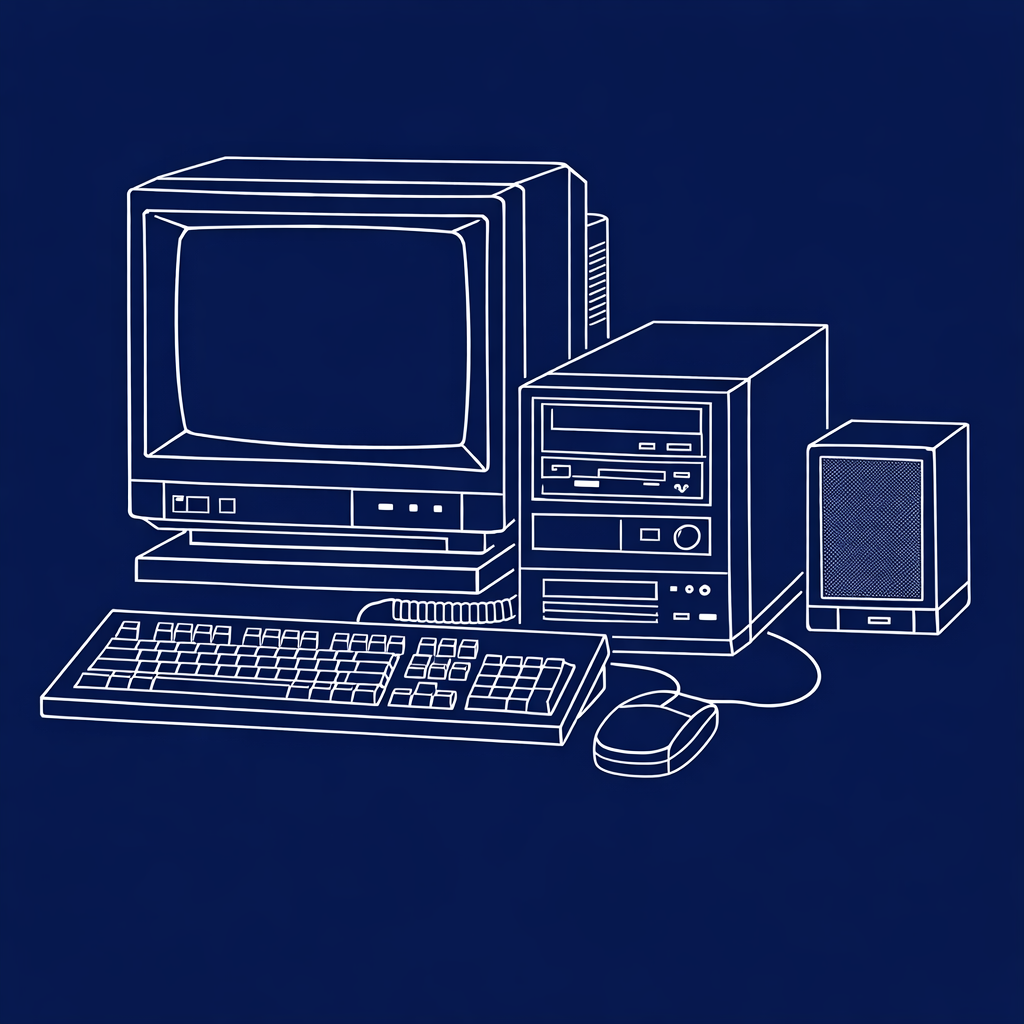
for DOS (or DOS emulation)
Read reviews at ClassicDOSGames.com
 Download it Here
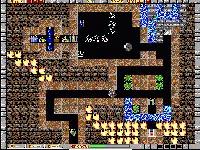
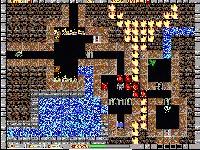
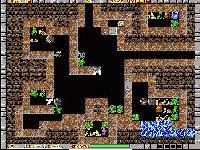
The sequel continues the journey deeper into the dungeons—where Grimlor has returned, stronger and more dangerous than ever.
Across three expanded episodes, the adventure grows in complexity with new traps, puzzles, and environmental mechanics. Players must think their way through shifting challenges: pushing boulders to block arrow-firing walls, using flowing rivers to drift into hidden chambers, and activating teleporters that warp you to secret treasure rooms scattered throughout the labyrinth.
The ultimate goal remains clear: uncover and destroy the source of Grimlor’s power, and free the village from his influence.
This second entry in the Grimlor series gained modest but meaningful attention, finding its way into a number of CD-ROM shareware compilations—some from reputable publishers, others from the more chaotic world of “fly-by-night” software bundles that defined the era.
It was still exciting to see it appear alongside major shareware names of the time like Apogee, id Software, and Epic MegaGames—companies that were shaping the future of PC gaming.
By this point, I had learned a great deal from my earlier work and wanted to push the design further. One of the key improvements was persistence: rooms now remembered their state when you left and returned, allowing for more strategic, interconnected puzzle design rather than isolated challenges.
Like most of my DOS-era projects, the game was written in Microsoft QuickBASIC 4.5, a tool that defined much of my early development experience.
I also brought in a coworker to collaborate on two of the levels, each of which ended up developing its own distinct personality and design style.
Looking back, it wasn’t just a sequel—it was a step forward in how I thought about game worlds, memory, and player choice.
Speed adjustment: This game can be played at a playable speed on faster machines by editing the file named SPEEDAT.DOG and changing the number to something like 300000. The higher the number, the slower the animation. Consider using DOSBox to emulate a slower processor.
Play it online on the Internet Archive!
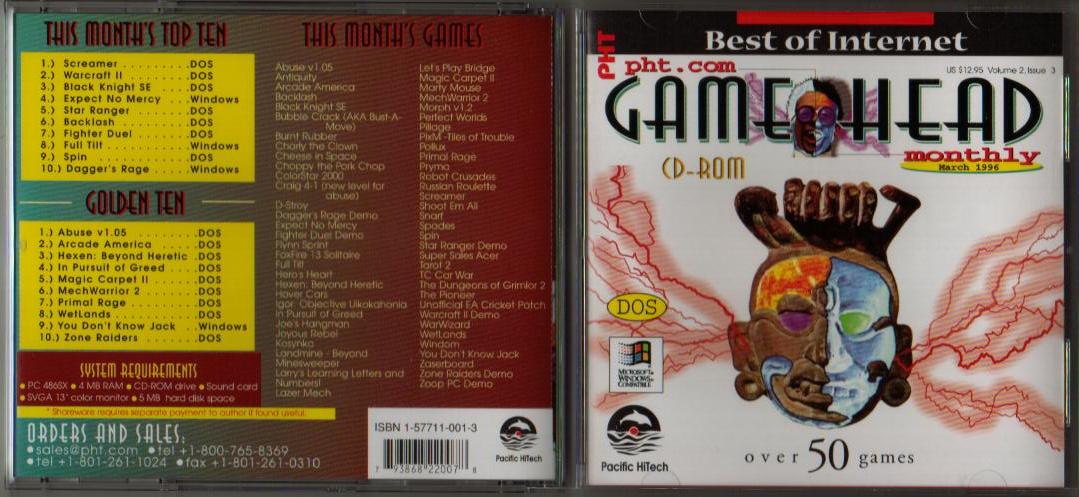
1996 Pacific HiTech: Featured The Dungeons of Grimlor II on their March Best of the Internet CD.